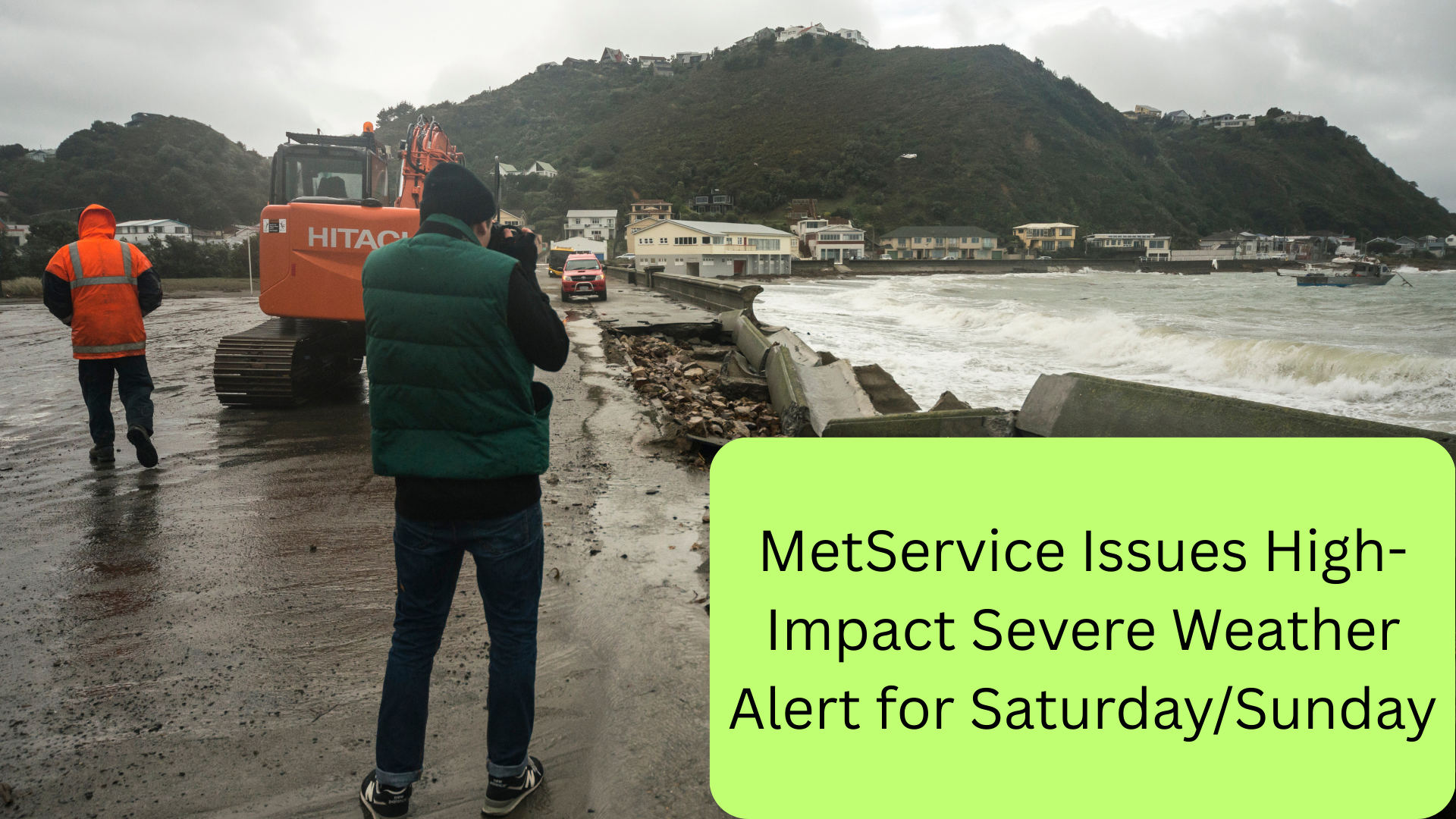
Imagine waking up to the sound of heavy rain against the windows, trees bending in the wind, and the radio warning that conditions will worsen before the day ends. That’s the reality many New Zealanders may face this weekend as a new round of severe summer storms moves toward the country, prompting MetService to issue an urgent nationwide alert.
Background: Why New Zealand Is Facing Another Summer Storm
New Zealand’s summer weather has become increasingly unpredictable, shaped by warm sea temperatures and humid air masses drifting across the Tasman Sea. According to MetService, this weekend’s system is being fuelled by a deepening low-pressure zone tracking from the northwest.
Forecasters say the setup will combine tropical moisture with unstable atmospheric conditions, making thunderstorms more likely and intensifying rainfall across both islands. The pattern mirrors several recent summers in New Zealand, where heavy rain and flooding have become more common.
Meteorologists note that while summer is typically associated with calm, warm days, the last decade has shown a rise in extreme weather events, including flash floods, damaging winds, and severe thunderstorms.
What’s New in the MetService Warning
MetService says the weekend system could bring several hazardous conditions, especially from Friday evening through late Sunday.
Key points from the latest alert:
- Heavy rain warnings for Northland, Auckland, Waikato, Bay of Plenty, Gisborne, and areas of the South Island.
- Possible surface flooding in urban and low-lying regions due to rainfall rates that may exceed 25–40mm per hour in localized bursts.
- Severe thunderstorm risk, including hail and lightning, especially in the upper North Island.
- Strong wind gusts, potentially reaching 100 km/h along exposed coastal areas.
- Travel disruptions likely on major routes due to reduced visibility and hazardous driving conditions.
MetService says the highest-risk windows will vary by region, but much of the country should prepare for unsettled and potentially dangerous conditions throughout the weekend.
Human Angle: How the Storm Is Affecting People
For many families, the announcement has sparked concern about travel, holiday plans, and property safety.
In Auckland, Sarah Thompson, a mother of two, spent Thursday evening securing outdoor furniture and checking emergency supplies. “We’ve had two close calls with flooding in the past year,” she said. “I don’t want to take chances, especially with young kids in the house.”
Meanwhile, small business owners — especially those operating summer markets, cafés, and tourism services — are bracing for cancellations. “Weather like this hits us hard because weekends are our busiest times,” noted Jay Malhotra, who runs a food truck stationed near Mount Maunganui. “We’re hoping it passes quickly, but everyone’s preparing for the worst.”
Official Statements
MetService meteorologist Helen Rourke says the agency is watching the system closely and updating warnings as conditions evolve.
“This is a dynamic setup, and the combination of humid air and strong winds means thunderstorms can develop quickly,” Rourke explained. “We’re urging people to keep an eye on alerts and avoid unnecessary travel during peak rainfall periods.”
Civil Defence has also activated readiness teams in several regions. A spokesperson from the National Emergency Management Agency stressed that communities should stay informed and follow guidance.
“Even short bursts of intense rain can cause dangerous flooding,” the spokesperson said. “Clear drains, secure loose items, and have a plan if you live in a flood-prone area.”
Expert Analysis and Data Insight
Climate researchers say this weather pattern aligns with recent trends toward more moisture-heavy systems during New Zealand summers.
According to environmental analyst Dr. Rangi Paewai, warmer ocean temperatures are playing a major role. “Sea surface temperatures around New Zealand have been hovering about one degree above average this season, which might not sound like much, but it significantly increases the amount of moisture in the air,” he said.
He added that even a small increase in humidity can intensify rainfall rates, making storms more severe.
A recent analysis also shows that New Zealand has seen a 15% increase in extreme rainfall events over the past decade, reinforcing the need for preparedness and early alerts.
Comparison Table: Regional Impacts Expected This Weekend
| Region | Expected Conditions | Peak Risk Window | Notes |
|---|---|---|---|
| Northland | Heavy rain, thunderstorms, strong winds | Fri PM – Sat AM | Localized flooding likely |
| Auckland | Heavy rain, hail, lightning | Fri night – Sun AM | Travel delays expected |
| Waikato | Persistent rain, occasional thunder | Sat – Sun | Risk of river level rises |
| Bay of Plenty | Very heavy rain, possible slips | Sat – Sun PM | High-risk for isolated communities |
| Wellington | Strong winds, periods of steady rain | Sat | Coastal gusts nearing 100 km/h |
| Canterbury | Patchy rain, increasing Sunday | Sun | Lower risk but still unsettled |
| Otago & Southland | Mild showers, strengthening late | Sun night | Cold front may follow |
What Readers Should Do This Weekend
MetService emphasises practical safety measures, especially for those living in areas prone to flooding or storm damage. Residents are encouraged to prepare early and monitor official updates.
Here’s what you should consider:
- Clear gutters and outdoor drains.
- Move vehicles away from flood-prone driveways.
- Secure outdoor furniture and trampolines.
- Charge phones and have torches ready in case of power cuts.
- Plan travel carefully — consider delaying trips if possible.
- Keep pets indoors during thunderstorms.
Farmers and rural communities should also prepare for potential disruptions, including managing stock and checking access roads.
Q&A: Common Questions About the Summer Storm
1. When will the worst of the storm hit New Zealand?
Most regions will see the strongest conditions between Friday evening and late Sunday, though timing varies by location.
2. Which areas are expected to be hit hardest?
Northland, Auckland, Bay of Plenty, and parts of the East Coast are at high risk for heavy rain and thunderstorms.
3. Will the South Island be affected?
Yes, though impacts will generally be milder. Canterbury, Otago, and Southland will see rain and strengthening winds late in the weekend.
4. Could there be power outages?
Yes, high winds and lightning may cause temporary outages, particularly in rural areas.
5. How much rain is expected?
Some regions could experience rainfall rates of 25–40mm per hour in localized areas.
6. Should people avoid driving?
If possible, avoid travel during peak rainfall, especially at night or in areas known for surface flooding.
7. Are flights likely to be affected?
Airlines may face delays or cancellations, particularly in Auckland and Wellington.
8. What should families do to prepare?
Secure outdoor items, have emergency supplies ready, and stay updated with local alerts.
9. Will beaches remain open?
Beaches won’t necessarily close, but high winds, rough waves, and lightning make swimming unsafe.
10. Are thunderstorms guaranteed?
Thunderstorms are likely but not guaranteed; conditions are ideal for quick development.
11. Is this storm linked to climate change?
Experts say warmer oceans and more humid air masses are contributing to more intense summer storms.
12. Will schools or events be cancelled?
Local organizers and authorities will decide, but outdoor events may be postponed.
13. How can people check for updates?
Listen to radio updates and monitor MetService alerts throughout the weekend.
14. Should elderly residents take extra precautions?
Yes — ensure they have support, working communication devices, and emergency supplies.
15. When will the weather improve?
Conditions are expected to ease gradually late Sunday into Monday.
While the upcoming summer storm is expected to bring challenging conditions across New Zealand, preparation and awareness can help communities stay safe. Authorities advise keeping informed, avoiding unnecessary travel, and taking simple steps around the home to reduce risk. For many, this weekend will be a reminder of how quickly New Zealand’s weather can shift — and how important it is to stay ready when it does.










Leave a Comment