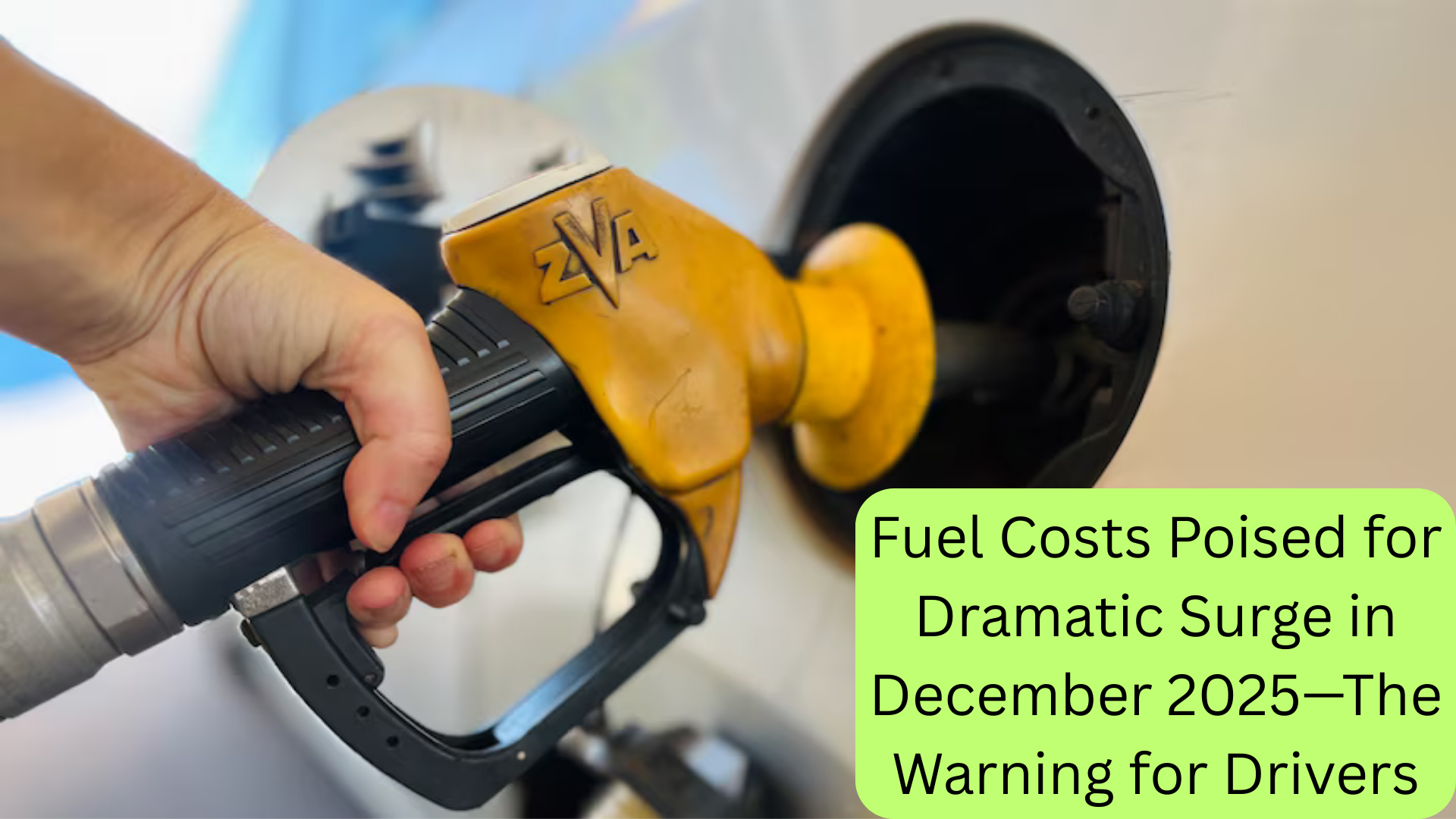
Imagine starting the first week of December with the usual school run, only to watch the numbers on the fuel pump climb faster than expected. That’s the worry facing many drivers across the country this winter, as analysts warn that a sharp rise in petrol and diesel prices could hit before the holiday season.
Families planning long-distance travel, delivery drivers relying on stable costs, and commuters already stretched by living expenses may feel the impact most strongly. With fuel prices expected to surge in December 2025, motorists are being urged to act early.
Why Fuel Prices Are Rising
The expected increase is linked to several international and domestic factors shaping supply and demand.
Global oil production has tightened after temporary output cuts by major exporting countries, while transportation demand remains high as holiday travel picks up.
At home, refinery maintenance schedules and rising wholesale costs are adding extra pressure, contributing to the projected December surge. Economists say the mix of international tensions, seasonal patterns, and supply chain adjustments has created a “perfect storm” for price volatility.
What’s New: Key Changes Expected in December
Drivers could see noticeable shifts in the coming weeks. Analysts expect:
- A possible rise of 6–10 cents per litre across major fuel types.
- Higher demand before Christmas increasing retail pressure.
- Temporary stock shortages at some regional stations if supply tightens.
- Greater price variation between urban and rural areas.
- More frequent price cycling as retailers adjust to holiday traffic.
Motorists are being encouraged to monitor prices closely and fill up when they see stable rates, rather than waiting until the holiday rush.
Human Angle: Real Stories Behind the Forecast
For many households, even small increases in fuel costs can alter weekly budgets.
Sarah Whitmore, a 42-year-old community nurse who drives more than 300 kilometres a week, worries about the December spike. “I depend on my car for work. A sudden jump in fuel prices means I have to cut from somewhere else,” she said. “This time of year is already tight, especially with school holidays coming.”
Delivery contractors, who often operate on thin margins, are also preparing for the impact. Omar Rahman, a part-time courier, said he fills his tank nearly every two days. “It doesn’t sound like much, but even a few cents a litre adds up fast for people like us,” he explained.
Government and Official Statements
Transport officials say they are monitoring the global situation but warn that domestic fuel markets follow international trends.
Lydia Harper, a senior spokesperson for the Department of Energy and Transport, said, “While we don’t set retail fuel prices, we understand the pressure households are under. We encourage retailers to maintain transparent pricing as we move into December.”
She added that the government continues to review long-term measures aimed at stabilising transport costs, but short-term volatility is difficult to control.
Expert Analysis and Data Insight
Energy economists confirm that the December increase is consistent with recent global patterns.
Dr. Raymond Locke, an energy analyst at the National Market Observatory, noted that oil futures had risen steadily over the past month.
“There has been a roughly 4% increase in crude oil prices on the international market,” Dr. Locke said. “This flows directly into wholesale fuel costs, and consumers feel it at the pump.”
He added that early December tends to be a high-demand period: “People drive more, freight companies move more goods, and retailers respond quickly. Prices usually peak just before the Christmas break.”
Comparison Table: Expected December Fuel Price Changes
Below is a simplified projection based on current analyst estimates for December 2025:
| Fuel Type | Current National Average (per litre) | Expected December Range | Potential Increase |
|---|---|---|---|
| Unleaded Petrol | $1.72 | $1.78 – $1.82 | +6–10 cents |
| Premium Unleaded | $1.93 | $1.99 – $2.04 | +6–11 cents |
| Diesel | $1.85 | $1.91 – $1.95 | +6–10 cents |
| E10 | $1.67 | $1.72 – $1.77 | +5–10 cents |
These numbers may vary regionally, especially in rural communities that rely on longer transport routes.
Impact on Drivers: What You Should Do
With December approaching, motorists are being advised to take simple steps to limit costs where possible. Keeping the tank topped up earlier in the month may prevent the need for emergency fills at peak pricing.
Drivers who rely on long-distance travel for work or family commitments may benefit from planning routes and checking local price apps or roadside signs regularly. Fuel-efficient driving techniques—smooth acceleration, proper tyre pressure, and reduced idling—can also make a difference over busy periods.
Fleet operators are being encouraged to prepare for higher operating costs, while households may want to account for the expected increase in their December budgets.
The Takeaway
The December 2025 fuel price surge isn’t guaranteed, but the warning signs are clear enough for drivers to take precautions now. Global trends, seasonal demand, and supply pressures all point toward higher costs at the pump as the holiday season approaches.
While the increase may be unwelcome, early planning gives motorists the best chance to minimise its effect. As families prepare for travel, shopping, and gatherings, experts say keeping an eye on fuel price movements could make a meaningful difference.
Reader Q&A
1. Why are fuel prices expected to rise in December?
Because of higher global oil prices, seasonal demand, and supply constraints affecting wholesale fuel markets.
2. How much could fuel prices go up?
Analysts estimate a rise of 6–10 cents per litre depending on fuel type and location.
3. Will the price increase happen nationwide?
Most regions are likely to see some increase, though rural areas may experience sharper variations.
4. Should drivers fill up early?
Experts recommend filling up sooner rather than later to avoid potential peak prices.
5. Will diesel also become more expensive?
Yes, diesel is expected to climb by a similar margin to petrol.
6. Are these increases permanent?
No. Fuel prices typically fluctuate and may drop after the holiday period.
7. Can government action prevent the rise?
Not directly. Retail fuel prices follow international oil markets.
8. How will this affect delivery drivers and couriers?
Higher operating costs could reduce earnings or increase service fees during peak periods.
9. Are there ways to reduce fuel consumption?
Maintaining correct tyre pressure, gentle braking, and avoiding unnecessary idling can help.
10. Will holiday travel make prices worse?
Yes, increased demand around Christmas is a major factor in seasonal price movements.
11. Is E10 likely to stay the cheapest option?
E10 usually remains the lower-cost alternative, though it may rise alongside other fuels.
12. How can families prepare for the increase?
Budgeting ahead and topping up early can help spread the cost.
13. Are price surges common this time of year?
Yes, December often sees price volatility due to travel and freight activity.
14. Could prices rise more than forecast?
It’s possible if global oil markets tighten further, but current estimates are considered moderate.
15. Will fuel prices fall again in January?
They may stabilise or decline once holiday demand drops, but this depends on global trends.








Leave a Comment