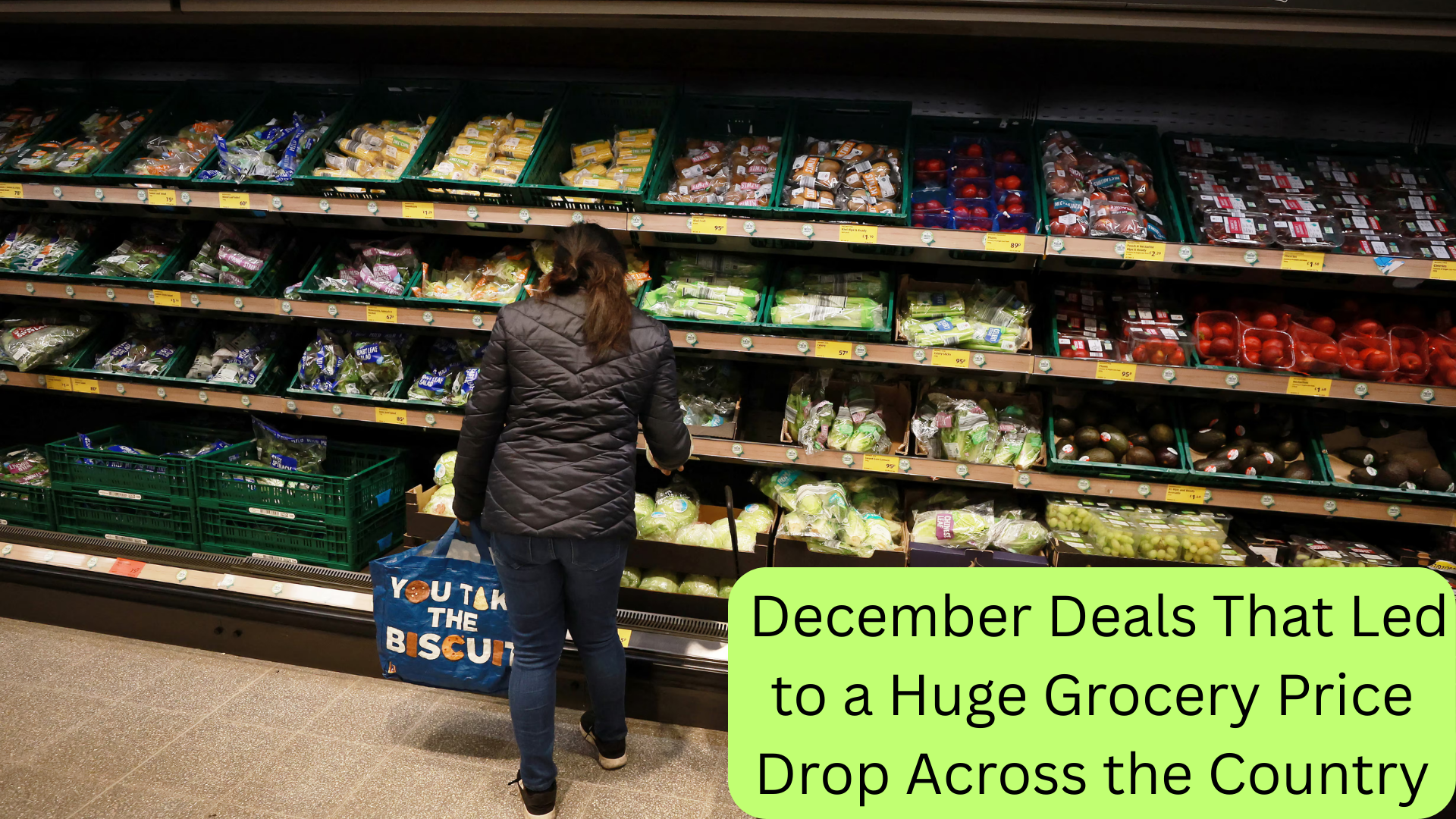
Imagine walking into your local supermarket in December and discovering your weekly grocery bill suddenly costs far less than it did just a month ago. That is exactly what thousands of New Zealand shoppers reported this week, as a rare and unexpected drop in grocery prices swept across major supermarkets before the Christmas rush. For many families, the shift feels like a welcome breath of relief after months of rising living costs.
Background: Why It’s Happening
New Zealand has spent much of 2024 battling stubborn food inflation. Prices for everyday staples such as bread, milk, cheese, and fresh produce climbed steadily, leaving households frustrated and budgets increasingly tight.
But several factors converged at the end of the year, pushing prices sharply downward. A stronger New Zealand dollar, reduced freight costs, and increased local supply of fresh produce have eased pressure on supermarket shelves. Retail experts also point to intensified competition among major chains aiming to restore customer confidence heading into 2025.
What’s New: Key Price Drops in December 2024
Recent scans across major supermarket chains show noticeable reductions compared to November. Shoppers report that the December 2024 grocery price drop is the steepest month-to-month decline seen this year.
Key changes include:
- Fresh fruit and vegetables down an estimated 7–10%.
- Dairy basics such as milk and cheese reduced by 4–6%.
- Bread and cereal products falling around 3–5%.
- Chicken and beef prices easing by 5% due to seasonal supply peaks.
- Holiday essentials like butter, chocolates, and soft drinks showing discounts ahead of Christmas promotions.
For many households, these cuts are not small. Families say they are saving anywhere from $15 to $40 per shop, depending on basket size.
Human Angle: Real Stories From Shoppers
For Christchurch mother Sophie Rawiri, the change was immediately noticeable. She walked out of her local supermarket this week saving nearly $30 on her usual family shop.
“I checked the receipt twice because I couldn’t believe it,” Rawiri said. “For once it felt like the supermarket trip didn’t break the budget. It’s been a long year for a lot of families.”
In Hamilton, pensioner Graham Tui said the reduced prices allowed him to buy extra fresh produce he normally skips. “When carrots go down and apples drop a bit too, it makes a big difference,” he said. “You feel like you can eat properly again.”
Stories like these are appearing nationwide as shoppers adjust to a rare moment of financial relief near the end of the year.
Official Statements
The Ministry of Business, Innovation and Employment confirmed it has been monitoring the downward trend closely. While officials urged caution about reading too much into short-term shifts, they acknowledged the improvement.
“December’s decrease reflects a combination of seasonal supply, currency movement, and competitive pricing strategies,” said spokesperson Helen Murray. “We are hopeful that more stability will continue into early 2025, but food prices can still change quickly.”
Major supermarket chains also released short statements noting that lower shipping costs and improved supply chains contributed to the reductions. They emphasized that they plan to keep prices as low as possible throughout the holiday season.
Expert Analysis and Data Insight
Economist Dr. Riley Hammond from the New Zealand Retail Institute said the December grocery price drop is significant.
“We haven’t seen a combined reduction of this size in months,” he explained. “In simple terms, supply is improving faster than demand is rising, and that gives supermarkets room to adjust.”
He added that freight costs have fallen nearly 12% compared to the same time last year, easing pressure on imported goods and helping retailers offer more competitive prices.
However, Hammond warned that weather patterns or international shipping delays could still push some prices back up in early 2025.
“For now, consumers should enjoy the relief, but stay cautious with budgets,” he said.
Comparison Table: November vs December Price Movement
Below is a simplified snapshot showing estimated average price movement across popular grocery categories:
| Category | November Average Price | December Average Price | Change |
|---|---|---|---|
| Fresh Produce | Higher seasonal rates | Lower due to supply | -7% to -10% |
| Dairy Basics | Peak early-spring costs | Stable manufacturing | -4% to -6% |
| Bread & Cereal | Standard pricing | Increased competition | -3% to -5% |
| Meat & Poultry | Limited supply in Nov | Improved availability | Around -5% |
| Holiday Essentials | Pre-Christmas prices | Promotional discounts | Varies, mostly down |
This table reflects broad market trends and illustrates the scale of the month-to-month shift many shoppers are noticing in store.
Impact: What Readers Should Do
For New Zealand shoppers, the December price drop presents a rare opportunity to stretch budgets further.
Here’s what consumers can consider:
- Monitor weekly specials, as supermarkets are competing aggressively this month.
- Stock up on long-lasting pantry items, especially while discounts remain strong.
- Choose seasonal produce, which is cheaper due to abundant local supply.
- Compare prices across stores, as some chains are offering deeper cuts than others.
- Use loyalty programmes wisely, as points and rewards often increase during holiday periods.
Families preparing for Christmas meals may also find that festive staples are more affordable than last year, allowing for more flexible planning.
Q&A: What Readers Want to Know
1. Why have grocery prices dropped in New Zealand this December?
Better supply, lower freight costs, and increased supermarket competition led to broad price reductions.
2. Is this the biggest grocery price drop of 2024?
Yes, early data shows December saw the steepest month-to-month decline of the year.
3. Will the prices stay low into 2025?
They might stay stable for a short period, but experts warn they could rise again depending on weather, shipping, and global supply chains.
4. Which items saw the biggest drop?
Fresh produce, dairy basics, and meat reported some of the most notable reductions.
5. Are holiday items cheaper too?
Yes, many supermarkets have discounted chocolate, soft drinks, and baking supplies ahead of Christmas.
6. Can shoppers expect shortages because of lower prices?
No widespread shortages are expected; the drop is price-driven, not supply-restricted.
7. How much can the average family save?
Some households report savings between $15 and $40 per shop, depending on their basket.
8. Are all supermarkets reducing prices equally?
No. Some chains are more aggressive with discounts due to competition.
9. What about imported products?
Many imported items are cheaper thanks to lower freight costs and a stronger NZ dollar.
10. Is meat cheaper than last month?
Yes, meat and poultry prices have eased around 5% on average.
11. Will there be more discounts closer to Christmas?
Likely. December is typically a promotional period for major supermarkets.
12. Are fruit and vegetable prices expected to rise again after the holidays?
They could, depending on weather conditions and demand in early 2025.
13. Should shoppers buy in bulk now?
Bulk buying long-life items can be cost-effective while discounts remain strong.
14. Are loyalty card prices affected?
Yes, loyalty programme discounts may increase as stores compete for end-of-year spending.
15. Does this price drop benefit low-income households the most?
Yes, families with tight budgets often see the biggest impact from reduced grocery costs.











Leave a Comment