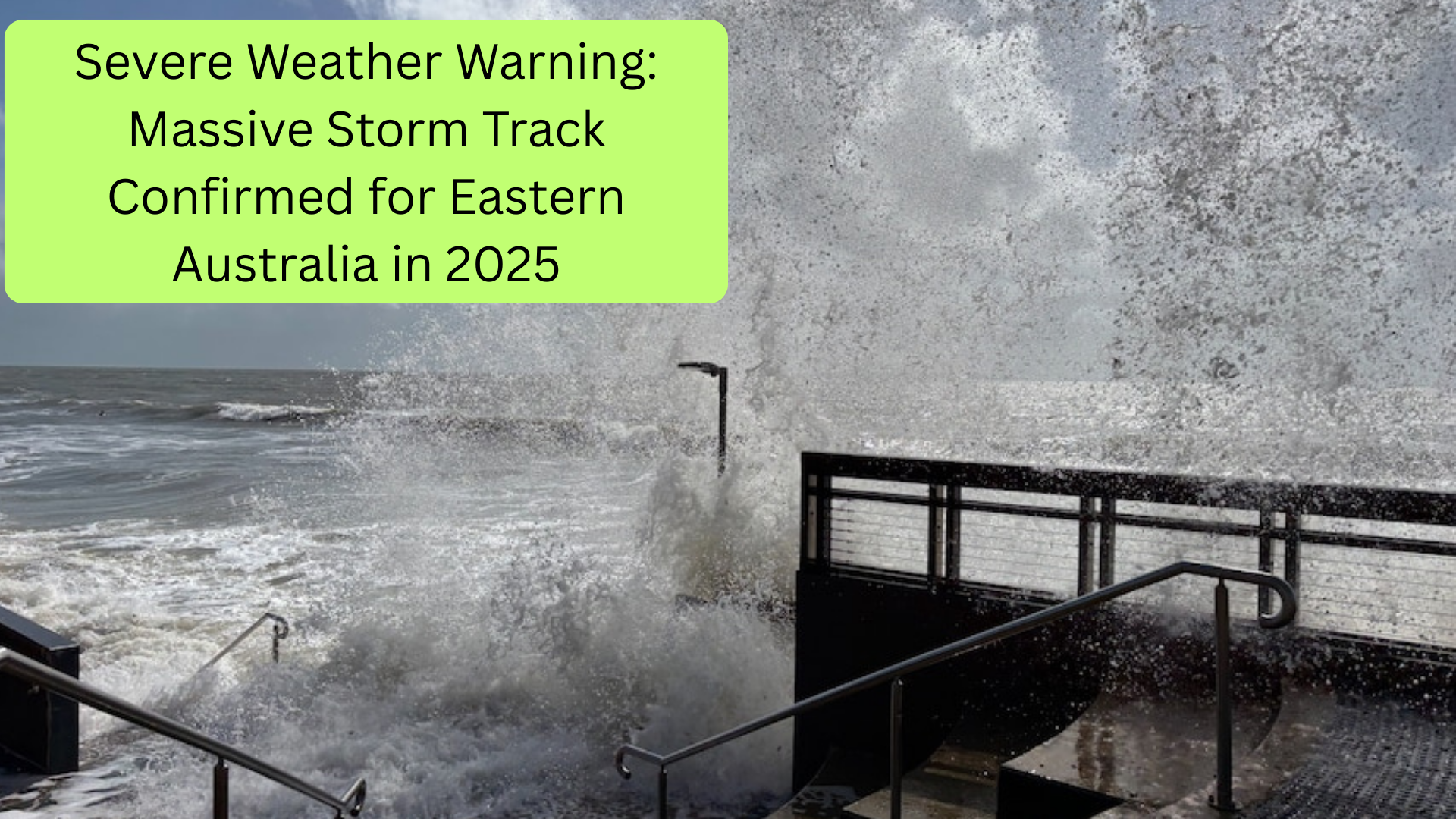
Imagine waking up to the piercing, unmistakable sound of the emergency alert on your phone—not a test, but a genuine Severe Weather Warning. This is the reality facing hundreds of thousands of residents along the eastern coast of Australia as a Massive Storm system, named Tropical Cyclone Anya, is confirmed to be on a direct path toward landfall. The clock is ticking, and the critical preparation window is rapidly closing with less than 48 Hours until the worst impacts begin.
The Bureau of Meteorology (BOM) has upgraded its assessment, urging immediate action in These Regions that stretch from the central Queensland coast down into northern New South Wales. This is not a typical seasonal event; Cyclone Anya is rapidly intensifying over abnormally warm sea surface temperatures, promising destructive wind gusts, torrential rainfall, and life-threatening coastal surges. The collective safety of communities now rests entirely on preparedness and swift compliance with official evacuation advice.
The current forecast indicates that the core of the Massive Storm is Set to Hit These Regions by late Thursday evening. Authorities are emphasizing that delaying preparations until the last minute could put lives at extreme risk, particularly for those living in low-lying or coastal areas. The overarching message from every government agency is simple: Secure your property and prioritize your family’s well-being immediately.
Background: Why This Storm is Rapidly Intensifying
The meteorological conditions that have fueled this extraordinary threat are a blend of seasonal averages and anomalous factors specific to the 2025 weather cycle. The Massive Storm began as a low-pressure trough, but the ocean environment it encountered proved exceptionally nurturing. Sea surface temperatures off the coast of Queensland are currently registering two degrees above the long-term average, providing the high-octane energy needed for rapid cyclogenesis.
This warm water acts like jet fuel for tropical systems, allowing them to transform from a low-grade depression into a dangerous Category 3 storm in less than 36 hours. The track is being influenced by a slow-moving high-pressure system to the south, which is effectively steering the cyclone directly towards a highly populated section of the Australian coastline. This unfortunate steering mechanism is what makes the current Severe Weather Warning so critical for These Regions.
Compounding the problem is the saturated state of the ground in many coastal areas, a legacy from earlier-season rainfall events. This saturation drastically increases the risk of flash flooding and widespread landslips when the core of the Massive Storm arrives. The combination of intense wind, vast rainfall totals, and unstable ground means the impact is expected to be widespread and multifaceted.
What’s New: Key Threats and Affected Regions in 48 Hours
The Severe Weather Warning explicitly targets a defined area, detailing the specific threats that residents in These Regions must prepare for. The primary concerns are wind speed, deluge-level rainfall, and the dangerous storm surge.
The areas currently issued a Category 3 Cyclone warning, meaning immediate action is required, include:
- Central Queensland Coast (From Mackay to Bundaberg): Expected to bear the brunt of the destructive 180 km/h wind gusts upon landfall. Power outages are considered a certainty for this area.
- Southeast Queensland (Brisbane, Gold Coast, Sunshine Coast): While likely avoiding the central eye, These Regions are forecast to experience damaging gale-force winds (up to 120 km/h) and extreme rainfall totals, leading to river and flash flooding.
- Northern New South Wales (Tweed Heads to Grafton): The heavy rainfall bands and dangerous surf are the primary threats here. The BOM has issued flood warnings for all major river systems in this area, confirming that the impact will be felt far beyond the coastline.
The peak danger period is defined as a 12-hour window beginning Thursday night and continuing into Friday morning, during which the Massive Storm will track inland before degrading. The intensity is what makes this Severe Weather Warning stand out from typical wet weather events, requiring preparation well within the 48 Hours window.
Human Angle: The Race Against Time for Coastal Businesses
David Kelleher, a 52-year-old owner of a small boat repair workshop near the Bundaberg coast, is facing a race against time to save his livelihood. He and his two employees have been working around the clock since the Severe Weather Warning was upgraded, attempting to secure irreplaceable equipment and haul boats out of the water.
“When you hear ‘Category 3’ and ’48 Hours’, you don’t mess around,” David explained, visibly stressed as he lashed down a large canvas cover. “Last year, we lost a customer’s dinghy when the surge came in unexpectedly high. This time, we’ve already moved the generator and all the heavy machinery onto cinder blocks. We can replace a roof, but we can’t replace the custom tools.”
David emphasizes that the real fear isn’t just the wind, but the rapid surge predicted to accompany the storm’s high tide. “We’re inland just enough to avoid the worst of the eyewall, but the water—that’s what wipes you out. The community here knows that when These Regions are alerted, every minute counts.” His decision to start preparations early is mirrored by countless residents across the alerted areas, taking the Severe Weather Warning with the gravity it requires.
Official Statements: Public Safety and Evacuation Mandates
Authorities have been unambiguous in their communication regarding the urgency of the Severe Weather Warning. State Emergency Service (SES) Commissioner Eleanor Vance confirmed that resources are mobilized and urged compliance with mandatory evacuation orders, expected to be issued for specific low-lying areas within the next 24 hours.
“Our message is clear: do not wait for the wind to start. If an evacuation order is issued for your address in These Regions, you must leave immediately,” stated Commissioner Vance. “We cannot risk the lives of our first responders attempting to rescue residents who chose to ignore a Severe Weather Warning and delay their departure during the peak of the Massive Storm.”
Commissioner Vance confirmed that due to the projected rainfall and the sheer scale of the system, local emergency centers have been fully stocked and staffed across the entirety of the threatened area in Australia. Furthermore, she noted that the police would be maintaining a presence in evacuated zones to deter potential looting, ensuring residents could leave their properties with a heightened sense of security.
Expert Analysis: The Threat of Water and the Rainfall Statistic
Dr. Helen Chen, a climatologist at the University of Queensland, provided a stark analysis of the projected rainfall and flood risks associated with the Massive Storm. She pointed out that while the wind receives significant media attention, the water—both from rain and sea—is typically responsible for over 80% of cyclone-related fatalities and damage.
“We are currently forecasting rainfall totals in excess of 450 millimetres in the region of landfall, specifically across the catchment areas of key river systems, over a 36-hour period,” explained Dr. Chen.
“To put that in perspective, that is nearly half the annual rainfall for Brisbane. This volume, combined with the storm surge—which could lift sea levels by two to three meters—creates an almost impossible scenario for low-lying infrastructure to cope with.”
Dr. Chen stressed that the widespread nature of the Severe Weather Warning is due to the size of the system. Even areas several hundred kilometers inland from the coast, which are not directly in the path of the Category 3 winds, will receive flood-inducing rainfall. She also analyzed historical data, confirming that tropical cyclones making landfall in the 2025 season are exhibiting a higher rate of intensification due to climate factors, demanding greater vigilance from These Regions every season.
Comparison Table: Cyclone Anya vs. Historic Event Impacts
To illustrate the severity of the incoming Massive Storm, the following table compares the projected impact metrics of Cyclone Anya (2025) to Tropical Cyclone Marcia, a significant event that severely impacted These Regions of Australia in 2015.
| Impact Metric | Tropical Cyclone Marcia (2015) | Projected Tropical Cyclone Anya (2025) | Notes on Severity |
|---|---|---|---|
| Category at Landfall | Category 5 (Rapidly Downgraded) | Category 3 (Sustained Inland Track) | Anya is larger and maintains strength longer. |
| Peak Wind Gusts | 285 km/h (Immediate Coast) | 180 km/h (Wider Area of Impact) | Marcia was more intense, but Anya covers a broader coastal area. |
| Maximum Rainfall Total | 350 mm (Localised) | 450 mm (Widespread Catchment Area) | Significantly higher flood risk over These Regions for Anya. |
| Storm Surge Height | 1.5 – 2.0 metres | 2.0 – 3.0 metres (Forecasted) | Higher potential for coastal inundation and erosion. |
| Regions Affected | Central Queensland Coast | Central QLD, SE QLD, and Northern NSW (Broader) | The Severe Weather Warning covers a larger population in 2025. |
Note: Projections for Cyclone Anya are subject to change but represent the high-end threat based on current BOM modelling as of the 48 Hours warning period.
Impact and What Readers Should Do
The Severe Weather Warning issued for the Massive Storm requires immediate and decisive action from every resident in These Regions. Do not assume the storm will change course; the focus must shift entirely to survival and minimizing property damage within the 48 Hours timeframe.
Action Step 1: Secure Property and Yard: Bring all loose items—including outdoor furniture, trampolines, toys, and garbage bins—inside or secure them tightly. These objects become dangerous projectiles in Category 3 winds. Every Driver Must Know to park vehicles inside a garage or under solid shelter, away from trees.
Action Step 2: Prepare Emergency Kit: Assemble a comprehensive emergency kit immediately. This must include non-perishable food for three days, 10 liters of water per person, a battery-powered radio, torches, ample supplies of medication, first-aid items, and essential documents (passports, insurance details) sealed in a waterproof bag.
Action Step 3: Fuel Up and Cash Out: Fill your vehicle’s petrol tank now, as service stations will be inaccessible or without power shortly after the Severe Weather Warning window closes. Withdraw necessary cash, as electronic payment systems and ATMs will likely fail during the peak of the Massive Storm.
Action Step 4: Follow Evacuation Orders: Identify your nearest official evacuation centre. If authorities issue a mandatory evacuation order for your zone, do not hesitate. Leave immediately and inform a contact person of your destination. Your life is not worth the risk of remaining.
The confirmation of the Massive Storm hitting These Regions in 48 Hours necessitates a swift and serious response from the Australian public in 2025. By adhering strictly to the Severe Weather Warning advice, preparing emergency supplies, and complying with all official directives, communities can navigate this serious threat. The emergency services are mobilized, and aid will follow the storm’s passage. While the next few days will test the resilience of the coast, acting calmly and responsibly now will ensure that the path to recovery is safe, swift, and strong.










Leave a Comment