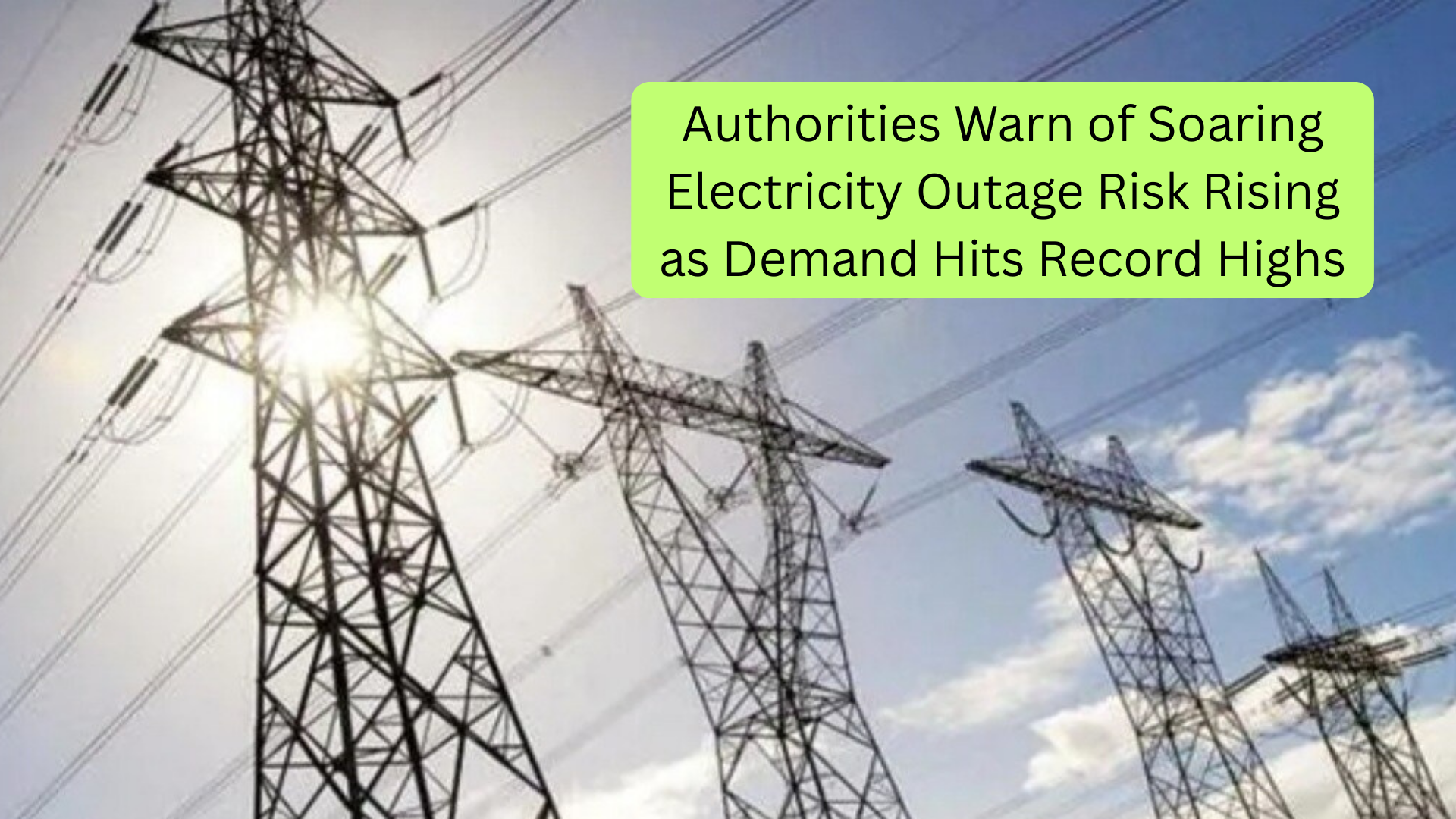
Imagine waking up to a sweltering, 40-degree Celsius day in Australia in 2025, only to find your air conditioning silent and your refrigerator warming. This scenario is increasingly likely as the national energy market operator issues a severe warning: the Electricity Outage Risk Rising From 27 November is reaching critical levels. A confluence of extreme temperatures, unprecedented peak demand, and scheduled maintenance has aligned to put enormous Heatwave Pressures the Power Grid. This is not a drill; it is a genuine forecast of system stress that requires immediate public awareness and coordinated action.
The warning specifies the period starting on 27 November, correlating with the predicted peak of the first major summer heatwave to sweep across the eastern and southern states. These are the regions most reliant on residential air conditioning and which contain the oldest, most strained elements of the transmission network. Authorities are clear: without significant efforts to conserve power, localized and even widespread rolling blackouts—or ‘load shedding’—may be necessary to protect the entire system from catastrophic failure due to these intense Heatwave Pressures the Power Grid.
Background: The Anatomy of a Summer Grid Failure
The risk of an Electricity Outage during a Heatwave is fundamentally a supply and demand problem amplified by thermal constraints. The demand side skyrockets, driven almost entirely by air conditioning use, as millions of Australians simultaneously turn down their thermostats. This can cause demand to peak at levels 30% higher than a typical summer day. On the supply side, the Power Grid itself becomes less efficient and more vulnerable.
Transmission lines, built to carry immense currents, expand and sag in extreme heat, increasing the resistance and energy loss. Components like transformers and switching gear have upper temperature limits; if they overheat, they automatically trip offline to prevent permanent damage, causing local Electricity Outages. The combination of high demand and equipment failure creates a cascading risk that the network operator must manage by proactively reducing the load—the very definition of a blackout. Furthermore, planned or unplanned maintenance at key coal or gas power stations during warmer months reduces the overall available supply, exacerbating the vulnerability of the Power Grid just when it needs maximum reserve capacity.
The severity of the current situation is underscored by the forecasted duration of the heat event. Unlike a quick, sharp spike, the weather system predicted from 27 November involves multiple consecutive days of extreme heat. This continuous pressure prevents the Power Grid from cooling down overnight, leading to compounding fatigue in critical infrastructure and driving the Electricity Outage Risk Rising to unprecedented levels for this time of year in 2025.
What’s New: The Specific Warning and Key Changes
The formal warning issued by the national energy market operator highlights the specific time-frame and geographic areas under most severe threat, pinpointing the peak afternoon demand window. This detailed forecasting allows for targeted response measures, but also mandates public action.
Key changes and warnings relevant to the Electricity Outage Risk Rising From 27 November:
- Activation of Reserve Generation: The market operator has pre-emptively activated emergency reserve generation capacity. These are typically older, less efficient generators kept offline, costing significantly more to run. This step demonstrates the seriousness of the supply gap anticipated from 27 November.
- Voluntary Load Reduction Program: Large industrial users, such as manufacturing plants and mining operations, have been contacted and incentivised to voluntarily shut down or reduce non-essential consumption between the hours of 3 PM and 8 PM daily, starting from the heatwave’s expected commencement.
- The 4 PM to 7 PM Danger Zone: Official communication identifies the late afternoon to early evening period (4 PM to 7 PM) as the critical window when the Power Grid is most likely to fail. This is when solar generation drops off rapidly, but household demand—particularly air conditioning—remains at its absolute peak.
- Infrastructure Stress Point: The specific Heatwave Pressures the Power Grid are focused on the distribution network. The operator estimates that a 1°C increase in temperature during the peak window adds 450 Megawatts to the total system demand. The forecast jump in temperature from 27 November is expected to push demand 1,500 Megawatts past the guaranteed reliable operating threshold. This statistic highlights the narrow margin of safety currently available.
- Public Awareness Campaign: Unlike previous years, the warnings are highly specific, tying the risk to the date 27 November and urging proactive preparation, rather than reactive emergency measures.
Human Angle: The Vulnerable and the Dependent
The immediate threat of an Electricity Outage during a major Heatwave is most acutely felt by vulnerable Australians, including the elderly, the very young, and those with chronic medical conditions reliant on power.
Eleanor Vance, an 85-year-old resident of outer Melbourne, represents the human face of the crisis. Eleanor lives alone and relies on a portable oxygen concentrator for several hours each day. “The heat is bad enough, but knowing the power could go out at any moment is terrifying,” she said. “The oxygen machine needs power, and without the AC, the temperature inside my home can get dangerous within a couple of hours.” The Electricity Outage Risk Rising From 27 November forces people like Eleanor to scramble for contingency plans, often involving relocating to community centres or family homes, placing immense stress on caregivers and local services.
For small business owners, the impact is purely financial. Mark Davis, who runs a butchery, faces the prospect of losing thousands of dollars worth of stock if the power fails for more than a few hours. “We can manage a little fluctuation, but a full day or multiple rolling blackouts? That means throwing away all our fresh meat,” Mark explained. “We rely on the Power Grid being stable, and this warning from 27 November forces me to spend a huge amount on dry ice and backup generators just to survive three days of this Heatwave Pressure.” These stories underscore the widespread dependency on a stable Power Grid and the real-world costs of system instability.
Official Statements and Assurance of Preparedness
In response to the escalating concern, government and energy officials have moved to reassure the public that every possible contingency plan is being implemented to mitigate the Electricity Outage Risk Rising From 27 November.
“The safety of the community is our highest priority, and we are working closely with all generators and transmission operators to ensure maximum capacity is online,” stated official Energy Minister Patricia Chen. “We are asking the public not to panic, but to act responsibly. The warnings are specific so that communities can prepare their homes and businesses. The decision to manage demand by requesting conservation, rather than reacting with unplanned blackouts, is a crucial step to protect the overall integrity of the Power Grid.” Minister Chen stressed that while every effort is being made to keep the lights on, the sheer magnitude of the forecast Heatwave Pressures the Power Grid means the public must participate in the solution.
The Minister also confirmed that hospitals and other critical infrastructure have guaranteed backup power supplies and are being closely monitored. However, she admitted that non-critical residential and commercial areas remain vulnerable to localized load shedding if the Power Grid stability requires it.
This diagram illustrates the complexity of the national electricity power grid network, highlighting why stress at any point—generation (power plants), transmission (high-voltage lines), or distribution (local poles/wires)—can lead to a cascading Electricity Outage during peak demand.
Expert Analysis: The Demand-Side Challenge
Energy system analysts suggest that while supply issues persist, the immediate danger from 27 November is overwhelmingly a demand-side issue that the current grid infrastructure in Australia is simply not built to handle. Dr. Leo Hanson, an energy policy researcher at the Australian National University, emphasised the need for behavioural change.
“The national Power Grid is engineered to handle a typical worst-case scenario. However, climate change is making the ‘worst case’ the new normal,” Dr. Hanson said. “When every single household unit turns on its air conditioning, often running at maximum capacity, the sheer surge of energy required completely overwhelms the distribution transformers in local neighbourhoods. The core problem is that air conditioning is the single largest contributor to the Heatwave Pressures the Power Grid, consuming disproportionately more energy than any other household device.”
Dr. Hanson noted that the new, specific warnings about the Electricity Outage Risk Rising From 27 November serve a vital function: demand management through social influence. “The cheapest and most effective megawatt is the one that is never used. By urging the public to pre-cool their homes, adjust AC settings by just a few degrees, or delay using dishwashers and clothes dryers until after 8 PM, we can collectively shave off the critical demand peaks that trigger system failure.” This communal effort is now the system’s primary defence against widespread blackouts in 2025.
Comparison Table: Energy Consumption During Heatwave Peaks
To illustrate the source of the Heatwave Pressures the Power Grid, the following table compares the typical energy usage of common household appliances versus their peak demand consumption during the hours of 4 PM to 7 PM in extreme heat conditions (kWh/hr).
| Appliance | Typical Daily Consumption (kWh/hr) | Peak Heatwave Consumption (4 PM – 7 PM, kWh/hr) | Contribution to Outage Risk |
|---|---|---|---|
| Reverse-Cycle Air Conditioner (Mid-Size) | 1.8 – 3.0 | 3.5 – 5.0 | Very High (Primary Contributor) |
| Refrigerator/Freezer | 0.1 – 0.2 (Cycles) | 0.3 – 0.5 (Constant Run) | Medium (Thermal Strain) |
| Clothes Dryer | 2.5 – 4.0 | 0 (Best to defer) | High (If run during peak time) |
| Oven/Stove Cooktop | 1.5 – 2.5 (When used) | 0 (Best to defer) | Medium (If run during peak time) |
| Lighting (LED) | Negligible | Negligible | Low |
Note: The data highlights that the Air Conditioner’s peak demand, coupled with the cumulative effect of refrigerators running constantly in the heat, is the overwhelming cause of the Electricity Outage Risk Rising From 27 November. Deferring the use of high-draw appliances like dryers and ovens is a simple, effective mitigation strategy.
Impact and What Readers Should Do
The clear implication of the Electricity Outage Risk Rising From 27 November is the urgent need for personal responsibility and proactive preparedness across Australia. Simply hoping for the best is no longer a viable strategy against the level of Heatwave Pressures the Power Grid currently forecast.
Action Step 1: Prepare a Blackout Kit: Every household should assemble a kit including battery-powered torches, a battery-powered radio, a first-aid kit, and enough non-perishable food and bottled water for 48 hours. Ensure all mobile devices and external battery packs are fully charged before 27 November.
Action Step 2: Implement “Pre-Cooling”: On the days leading up to and including the heatwave, cool your house aggressively during the middle of the day (when solar generation is high and system demand is lower). Then, from 3 PM onwards, raise your thermostat setting by 2 to 3 degrees. For example, moving from 22°C to 24°C can save significant energy and drastically reduce the load on the Power Grid during the critical 4 PM to 7 PM window.
Action Step 3: Defer and Conserve: Schedule high-energy activities like running dishwashers, washing machines, and clothes dryers to occur after 8 PM. Turn off all non-essential lighting, computer monitors, and pool pumps between 4 PM and 7 PM. This collective sacrifice is the single most important factor in preventing large-scale Electricity Outages in 2025.
Action Step 4: Check on Vulnerable Neighbours: If you have elderly or medically dependent neighbours, check that they have a plan for managing a loss of power. Community support during a Heatwave is crucial, as the failure of the Power Grid places these individuals in immediate danger.
The warning that the Electricity Outage Risk Rising From 27 November is at critical levels is a stark reminder of the fragile balance between nature and infrastructure in Australia. While the Heatwave Pressures the Power Grid present a serious challenge, the situation is manageable if every consumer participates in demand reduction. This is a temporary crisis requiring a temporary, unified response. By taking simple, disciplined steps to conserve power during the critical afternoon peak, Australians can collectively safeguard the Power Grid, ensuring stability and minimising the chance of a widespread Electricity Outage when the nation needs cooling the most.








Leave a Comment