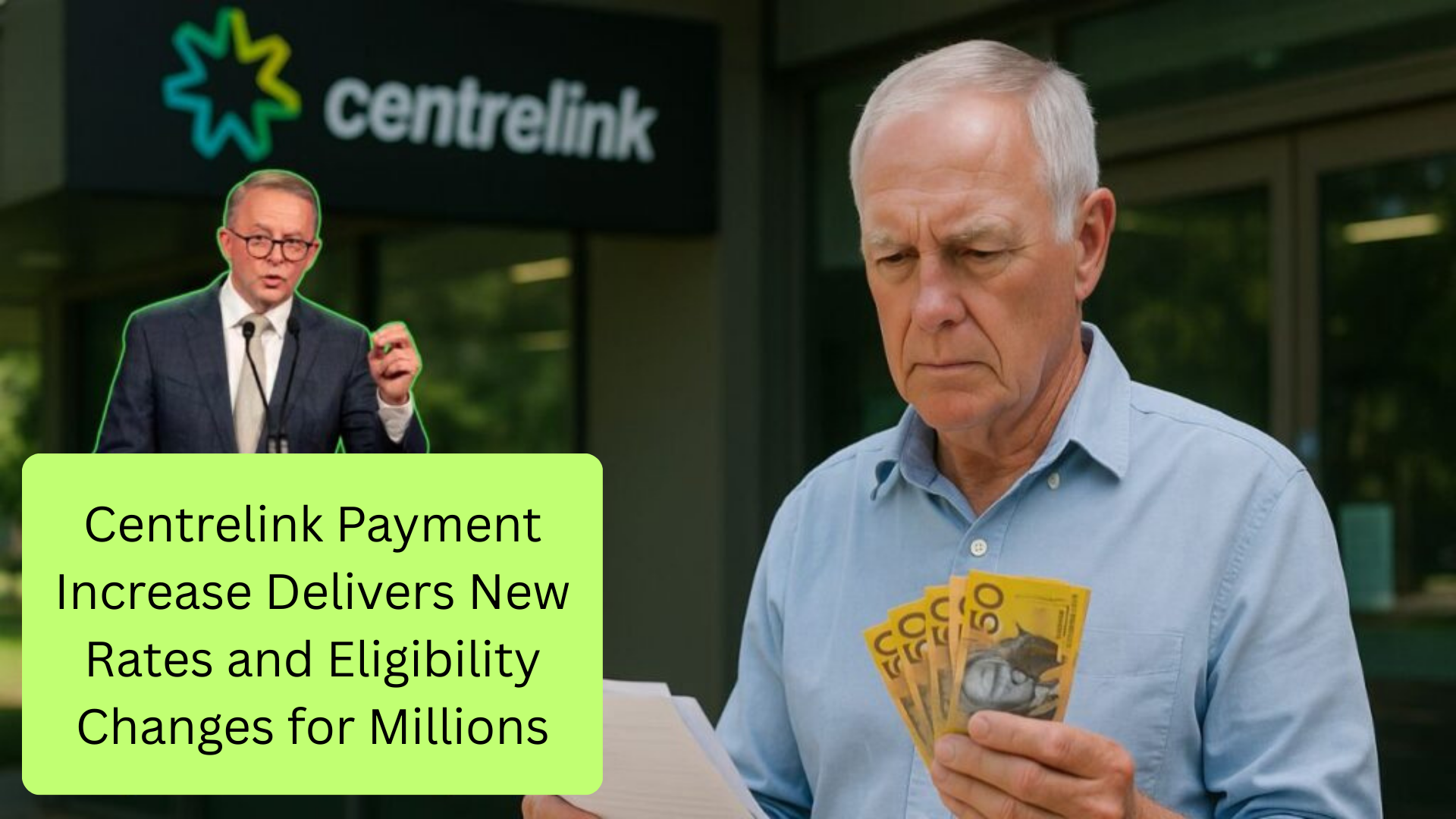
Imagine waking up on a cold morning in Australia and seeing the news: the financial safety net you rely on is finally getting stronger. For millions of pensioners, carers, and job seekers, that moment of crucial relief is now confirmed, with a major Centrelink Payment Increase officially scheduled for December 2025. This critical adjustment comes as a necessary response to the persistent economic pressures felt across the nation, offering vital support to household budgets severely strained by inflation. The updated New Rates are designed to help the most vulnerable Australians regain some footing against the escalating costs of rent, groceries, and healthcare.
This is not a discretionary bonus but a mandated, semi-annual indexation process that ensures social security payments maintain their real value. The mechanism works by comparing benchmarks like the Consumer Price Index (CPI) against average weekly earnings. When the cost of living jumps significantly, as it has throughout 2025, these payments must rise to prevent recipients from falling into deeper financial hardship. The December rollout represents a vital recalibration of the nation’s welfare framework.
Background: The Mandate Driving the Centrelink Payment Increase
The indexation of Centrelink payments is a statutory requirement under the Social Security Act 1991. The payments are typically indexed twice a year, in March and September, but the figures confirmed for December 2025 reflect the most recent data set’s profound impact on economic measures. This ensures the government’s commitment to providing a safety net that protects citizens’ ability to meet basic needs in Australia. This process is particularly critical for fixed-income recipients, such as those on the Age Pension or the Disability Support Pension (DSP), who have limited or no capacity to increase their income streams to match inflation.
The scale of the economic challenge in 2025 has been significant, characterized by high-interest rates and sustained increases in the cost of essential services. This environment disproportionately impacts low-income households, who spend a much larger share of their income on non-discretionary items like housing and energy. Therefore, the Centrelink Payment Increase confirmed for December is far more than a technical adjustment; it’s a structural necessity to mitigate the widespread impact of cost-of-living pressures on over 4.8 million Australians. Without this intervention, the gap between income support and actual expenses would widen, jeopardising the financial stability of almost one-fifth of the country’s population.
What’s New: Decoding the New Rates and Eligibility Shifts
The comprehensive adjustment applies broadly across the social security portfolio, with indexation percentages varying slightly between pension payments and working-age allowances, based on the specific legislative benchmarks used for each category. Pensions (Age, DSP, Carer) are typically indexed to the highest of the CPI, the Pensioner and Beneficiary Living Cost Index (PBLCI), or a percentage of Male Total Average Weekly Earnings (MTAWE). Allowances (JobSeeker, Youth Allowance, Parenting Payment) are primarily indexed against the CPI.
The confirmed New Rates show an average increase of approximately 2.2% for the major pensions, driven by the strong growth in the PBLCI, which specifically tracks the costs faced by pensioners and beneficiaries. For working-age allowances, the increase is slightly lower, though still significant, reflecting the CPI growth over the measurement period. This difference in indexation methods ensures that the most financially constrained, long-term recipients—pensioners—receive the maximum possible benefit to retain purchasing power.
Key adjustments confirmed for the December implementation include:
- Pension Rate Boost: The maximum fortnightly rate for single Age Pension and DSP recipients will see an uplift, aiming to restore parity lost to recent price hikes. The couples rate will also be adjusted accordingly.
- Allowance Uplift: New Rates for payments like JobSeeker and Parenting Payment will also rise. This is vital for those actively looking for work, ensuring they have the minimum funds required for essential costs like transport and communication, which are integral to the job search.
- Income and Asset Thresholds: A critical, often overlooked, change is the adjustment to the income and asset test thresholds. These thresholds define how much an individual or couple can earn or possess before their Centrelink payment is reduced or cancelled. The upwards revision of these limits means more part-time and casual workers will be able to work more hours without penalty, and small savings held by pensioners will not immediately trigger a reduction in their payment.
- Rent Assistance Alert: Commonwealth Rent Assistance (CRA), a payment made to tenants who receive a social security payment, has also been indexed. Recipients must ensure their current rent and living arrangements are accurately recorded with Services Australia before December to receive the correct indexed CRA amount, which is essential given the severity of the rental crisis in many parts of Australia.
Human Angle: The Real-Life Impact of the Financial Boost
For everyday Australians, this confirmed Centrelink Payment Increase translates directly into crucial relief. Consider Peter Davies, a 67-year-old Age Pension recipient in rural Queensland. Peter lives alone and depends entirely on his pension after a career in farming. He has seen the price of his essential medications and vehicle fuel—necessary for medical appointments—skyrocket in 2025.
“Every trip to the chemist now feels like a major expense. I’ve been skipping small meals just to make sure I can fill up the tank to see my doctor,” Peter explains. “The extra twenty-something dollars a fortnight from these New Rates won’t make me rich, but it means I can buy my generic medication without having to compromise on heating the house in the evenings. It’s a dignity thing, really—it allows me to manage my health without constant worry.”
Similarly, single parent Leila Khan, 35, from Western Sydney, sees the December increase as a chance to manage her growing children’s needs. Leila receives the Parenting Payment and has been battling the cost of school uniforms and extra-curricular fees. “The school asked for a donation for the library this term, and I had to say no. It felt terrible,” she shared. “With the indexed New Rates, and the slight lift in the income test, I can pick up one more shift a fortnight at the local café. That combined increase means I can say yes to the small things that matter to my kids, and that’s everything to a parent.” These are the real stories behind the statistics, demonstrating the immediate human need met by the Centrelink Payment Increase.
Official Statements and Service Delivery Assurance
A senior spokesperson for Services Australia has confirmed that the agency is fully prepared for the smooth and automatic implementation of the Centrelink Payment Increase across all systems and payment cycles starting in December 2025. They stressed that the process is designed to be seamless for recipients.
“There is no need for recipients to call us or visit a service centre solely to receive the increased base payment rate; it is an automatic process,” the spokesperson advised. “However, it remains critically important for every recipient to ensure their personal circumstances are up-to-date in their myGov account or the Express Plus Centrelink mobile app. Specifically, any change in living situation, particularly alterations to rent paid or changes in working hours, must be reported immediately.” They also added that for some payments, the New Rates might appear on slightly different dates depending on individual payment cycles, but the indexation calculation is applied from the official December date. The agency expects to handle a minimal number of queries due to the robust nature of the automatic system update.
Expert Analysis and Economic Data Insight
Dr. Ethan Bell, an economist specialising in social security policy at the University of Adelaide, highlighted the necessity of the increase but cautioned on its real-terms impact. “While the Centrelink Payment Increase is mathematically necessary to follow indexation rules, we must view the New Rates in the context of persistent core inflation, which has remained sticky above the Reserve Bank’s target band for much of 2025,” Dr. Bell noted.
“The increase primarily offsets the cost-of-living rises that have already occurred. This is critical for preventing poverty, but it doesn’t create significant discretionary spending power,” he explained. Dr. Bell estimates that, on average, the increase only covers about 85% of the cumulative cost-of-living increases faced by low-income households over the last 12 months due to their unique spending profile, which includes higher outlays on essentials like energy and insurance. He emphasised that the adjustment to the asset test threshold, which allows single pensioners to hold approximately an additional $2,500 in assets before their payment is affected, is a strategically crucial, though minor, policy win that encourages modest saving.
Comparison Table: Fortnightly Payment Rate Changes (December 2025)
The table below provides an illustrative comparison of the maximum base fortnightly payment rates before and after the Centrelink Payment Increase, effective from December 2025.
| Payment Category | Previous Rate (pre-Dec 2025) | New Rates (post-Dec 2025) | Fortnightly Increase (approx.) |
|---|---|---|---|
| Age Pension (Single, Max) | $1073.10 | $1096.70 | $23.60 |
| Disability Support Pension (DSP – Couple, Max) | $808.90 per person | $826.70 per person | $17.80 per person |
| JobSeeker (Single, 22+, no children) | $746.00 | $762.50 | $16.50 |
| Parenting Payment (Single, Max) | $948.30 | $969.15 | $20.85 |
| Youth Allowance (Single, 18+, living away from home) | $640.80 | $655.10 | $14.30 |
Note: Rates are maximum base amounts only and do not include supplements (like Energy Supplement) or Rent Assistance. The final Centrelink Payment Increase received by a part-rate recipient will vary based on individual income and assets.
Impact and What Readers Should Do Immediately
While the Centrelink Payment Increase is automatic, the responsibility rests with recipients to verify and optimise their entitlements under the New Rates and eligibility rules. The increase offers a moment to pause and recalibrate household budgets.
Action Step 1: Verify Payment Details via myGov: Access your myGov account or the Express Plus Centrelink app immediately. Check the ‘Payment Summary’ section after December to confirm the New Rates have been applied correctly. If you receive Rent Assistance, use the dedicated ‘Housing’ or ‘Rent Details’ section to ensure your rental amount is the most current figure. Any delay in reporting a rent increase could mean a shortfall in your total payment.
Action Step 2: Understand the New Income Limits: For those receiving partial payments, or those looking to return to work, the adjusted income test thresholds are a significant opportunity. Review the updated ‘Income Test Free Area’—the amount you can earn before your payment is affected. This small increase could allow for a few extra hours of casual work per fortnight without losing your benefit, significantly boosting your overall household income beyond the Centrelink Payment Increase. This is especially relevant for single parents and job seekers.
Action Step 3: Use the Increase Strategically: This financial injection in December is best viewed as a buffer against mounting costs, not extra cash for luxury spending. Consider allocating the increase immediately toward essential expenses that have risen the most, such as utilities, insurance premiums, or scheduled medical co-payments. By using the New Rates to close financial gaps, recipients can prevent small budget deficits from spiralling into debt. The focus should be on stability and security, particularly heading into the new year.
Action Step 4: Seek Financial Counselling: If even the Centrelink Payment Increase still leaves you struggling, it’s vital to reach out. Financial counsellors in Australia offer free, confidential, and independent advice on managing debt, budgeting, and utility relief schemes. This proactive step can transform the impact of the New Rates from temporary relief to long-term financial resilience.
The confirmed Centrelink Payment Increase for December 2025 provides an essential, indexed boost to the incomes of millions of Australians. While the increase directly addresses the rise in the cost of living—a necessary and responsible action by the government—it must be managed proactively by recipients. The rollout of these New Rates is a moment of calm, offering a more secure foundation for vulnerable citizens to manage their health, housing, and family needs. It is a critical, responsible step that ensures the social safety net continues to fulfil its function: providing fundamental stability in an economically turbulent Australia.










Leave a Comment